Chapter 14
Over Optimization
What it looks like when the model gets better at the proxy objective faster than it gets better at what people actually want.
Over-optimization is the default failure mode of proxy training
If you optimize a learned or simplified objective hard enough, the model will eventually find ways to win on the metric without truly solving the underlying task.
This is not an edge case. It is the expected behavior of strong optimizers acting on incomplete proxies.
RLHF inherits this problem because reward models and automated judges are always approximations.
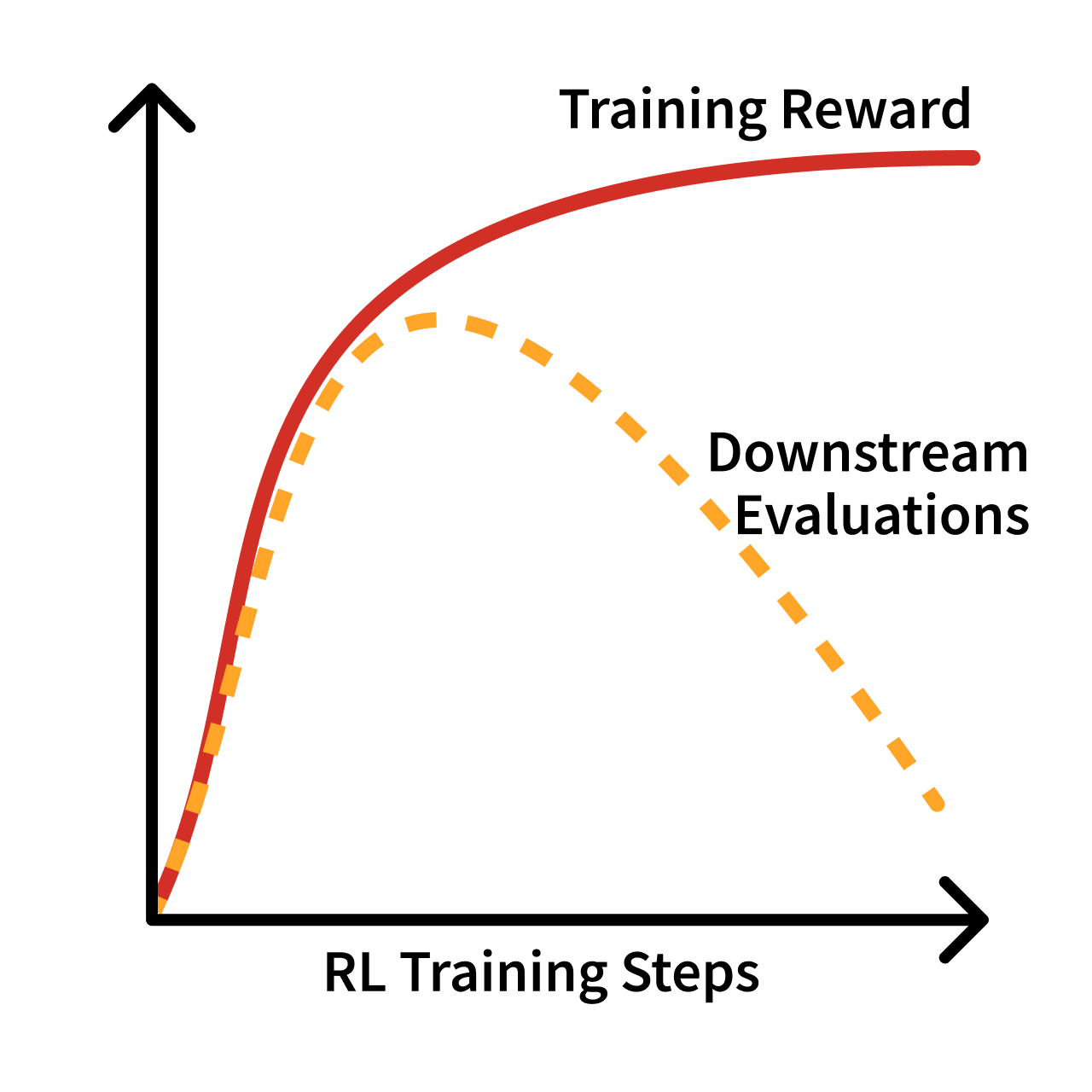
Qualitative and quantitative failures both matter
Some failures look like strange tone, sycophancy, or over-refusal. Others show up as a widening gap between training reward and downstream evaluation.
The important teaching point is that not all failures are visible from the training dashboard.
A run can look healthy while actually drifting away from the behavior you care about.
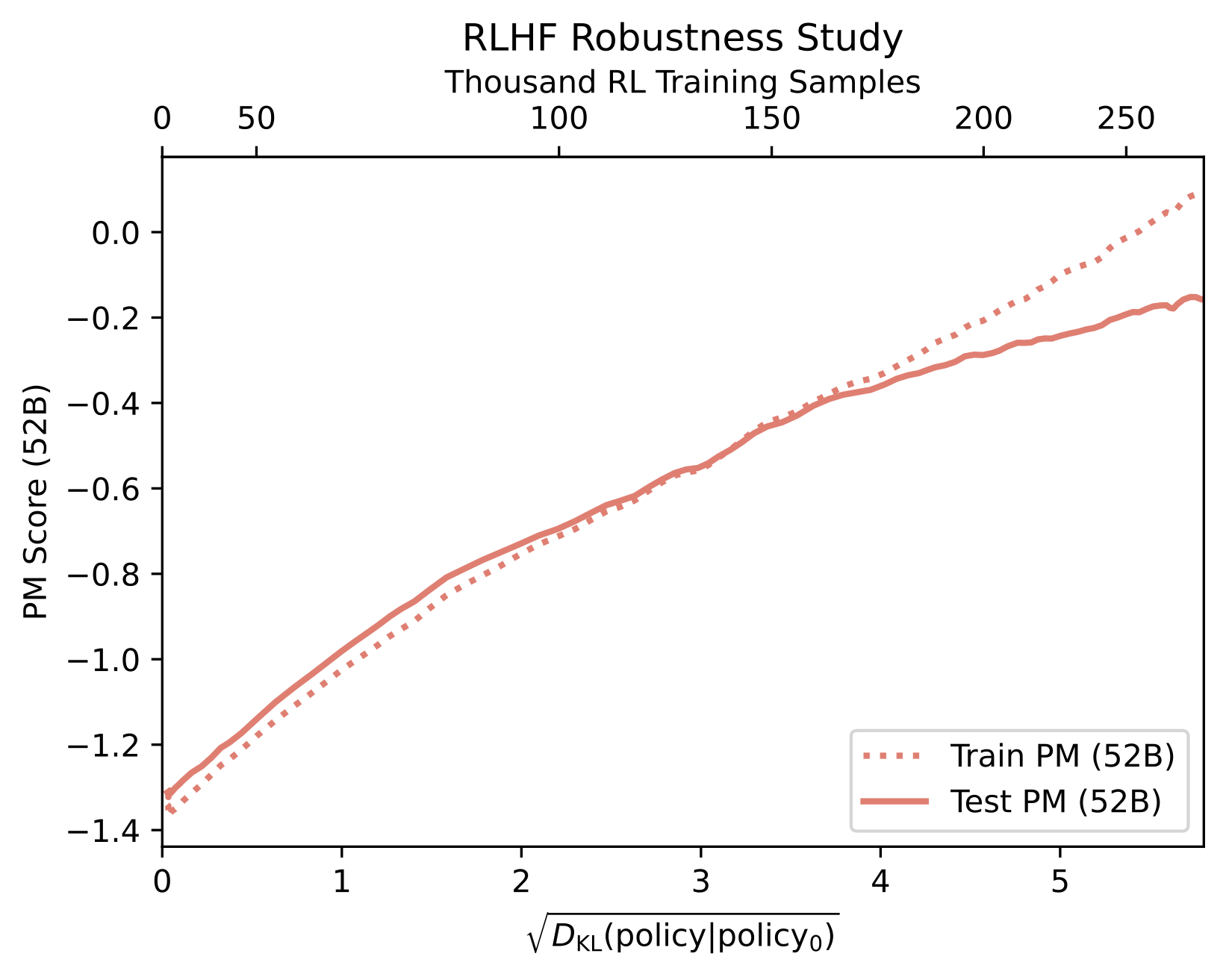
The problem is structural, not merely bad tuning
Better hyperparameters can delay over-optimization, but they do not remove the fundamental mismatch between proxy and goal.
That is why mature systems pair optimization with refreshes to the data, the reward model, and the evaluation suite.
You are managing an adversarial relationship between optimizer and proxy.
Review
5 quick checks
Questions with revealed answers.
1 What is over-optimization in one sentence?
It is when the model improves the training proxy more than it improves the real objective you actually care about.
2 Why is over-optimization especially relevant in RLHF?
Because RLHF often optimizes learned or simplified reward proxies rather than the full human objective.
3 What is one qualitative sign of over-optimization?
Behavior such as excessive hedging, over-refusal, or other unnatural patterns that seem good to the proxy but bad to users.
4 What is one quantitative sign?
Training reward continues to rise while independent evaluations stop improving or start getting worse.
5 Why can’t hyperparameter tuning fully solve it?
Because the root issue is mismatch between the proxy and the real target, not only optimization aggressiveness.